
Indian rupee has declined by about 25 per cent since December 31, 2014, and is nearing 80 against the dollar, the Lok Sabha was informed on Monday. The value of the rupee declined from 63.33 against a dollar on December 31, 2014, to 79.41 on July 11, 2022, Finance Minister Nirmala Sitharaman said in a reply quoting RBI data. The exchange rate of the Indian Rupee against the dollar was Rs 78.94 per dollar as of June 30, 2022, Finance Minister Nirmala Sitharaman said in a written reply.

'More than investors, fund houses, and advisors have raised caution and limited flows on small-and mid-caps.'

Eleven companies have launched their initial public offerings (IPOs) in December 2023, making this month the second-best December for public offerings since 1996. Collectively, they are raising Rs 8,182.7 crore this month. In December 2021, 11 companies raised Rs 9,534 crore. However, excluding December 2021, this month marks the best December for IPOs since 1996.

Sebi keen to attract larger number of retail investors

'The IPO market is cooling off and getting a reality check.'

Most of the long-only funds are closed-ended. This means that investors have to lock in their money for a fixed period before they can take it back.

But increase in surcharge for DDT to impact debt funds.

While seniors seeking a regular income should switch to debt funds from balanced funds, younger investors should invest in balanced funds after understanding their risks.
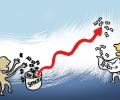
Small stocks made a dashing comeback in 2020 after delivering negative returns in the last two years as increased retail investor participation in pandemic times saw small-cap index surging up to 31 per cent and outperforming the bigger benchmark gauge. This year turned out to be eventful for the equity market, witnessing bearish and bullish sentiments at different points of time. While the initial part of COVID-ravaged 2020 saw the bears in full force amid concerns related to the pandemic and lockdowns hurting economic activities, bulls made a comeback towards the latter half of the year. As the market swayed with many lows as well as highs, small and mid-cap indices emerged as markets favourites in 2020.

Balanced advantage funds (BAFs) were popular in the later part of 2021 and continued to see good inflows until some months back as investors looked for safer options amid over-valuation concerns. As such concerns ease, investors are turning to riskier funds and shifting from BAFs. Redemptions from the hybrid fund category have exceeded in six of the last seven months, with investors pulling out a net of Rs 3,140 crore during the seven-month period.

Investors must adopt a balanced approach, incorporating both styles in their portfolios.

The total number of unique investors directly investing in the stock market has surged to 80 million for the first time, with the latest 10 million additions taking place in just eight months, according to data shared by the National Stock Exchange (NSE), the country's largest bourse. "The 80 million unique PAN (permanent account number) investors correspond approximately to around 50 million unique households in India amounting to around 17 per cent households directly investing in the Indian stock market via NSE's extensive nationwide network of trading members," said the exchange. In 2021, the number of domestic households were pegged at 300 million.

Retail participation in mutual funds from beyond the top 15 cities in the country has increased remarkably in the past 18 months.

The sudden movement of the rupee - post the monetary policy - is not a reason to panic, said currency dealers. According to them, a correction was overdue for the rupee that remained the best performing currency in the region for well over a month. The rupee closed at 74.72 a dollar on Friday from its previous close of 74.60. It had dropped 1.52 per cent against the dollar on April 7 after the Reserve Bank of India (RBI) announced its monetary policy, committing to buy Rs 1 trillion of bonds in the June quarter. A weak rupee goes well with the export narrative of the government, and is consistent with the RBI's intervention strategy that prevented an appreciation.

The mid-and small-cap segments at the bourses have outperformed their larger peers thus far in fiscal 2023-24 (FY24). While the S&P BSE Small-cap index has surged around 5.7 per cent in FY24, the S&P BSE Midcap index has gained 4 per cent during this period. In comparison, the S&P BSE Sensex has moved up around 2.2 per cent.

'The decline was inevitable as one-year returns have been negative.'

The initial public offerings (IPOs) by small and medium enterprises (SMEs) hit a new high in 2023-2024 (FY24). In this financial year, data from the Prime Database showed that 190 companies raised Rs 5,579 crore through the SME IPO route. This financial year's tally bettered the fundraising in the previous financial year when 125 companies raised Rs 2,235 crore.

Premium valuations and lack of big triggers will weigh on Indian equity markets in the near term, believes Mahesh Nandurkar, India Strategist, CLSA.

And, of course, create wealth over the long-term

However, volatility is likely to be on the rise, said Benjamin Yeo, MD & CIO (Asia & Middle-East) for Wealth & Investment Management, Barclays.

'There is not any negative connotation associated with it.'

Finance Ministry meets market participants, wants feedback.


The Federal Retirement Thrift Investment Board's (FRTIB), one of the US government's main retirement funds, decision to change the benchmark index for gaining international exposure will channel $3.6 billion (Rs 30,000 crore) inflows into domestic equities. India has a weightage of 5.3 per cent, seventh-most in the new MSCI ACWI IMI ex USA ex China ex Hong Index, which FRTIB now plans to use. India isn't part of the current developed markets-dominated MSCI EAFE index that the pension fund uses.

IndusInd Bank, Kotak Bank, ICICI Bank, Sun Pharma, Bajaj Finance and Ultratech Cement were prominent gainers. NSE Nifty rose 176.65 points to 14,867.35.

Led by the booming e-commerce sector, private equity investments in India surged over 17 per cent with deals worth $ 11.49 billion

The BSE SmallCap index gained 106 per cent in the one year ended May 12, 2021.

Two young men jostle in a rickshaw as it clatters along a narrow, bustling lane of North Kolkata, each with a leg dangling over the side of the vehicle, a bulging sack of cosmetics nestled between them. The protagonists here are the founders of Emami - Radhe Shyam Agarwal and Radhe Shyam Goenka - childhood friends who gave up cushy corporate jobs to build a fast-moving consumer goods (FMCG) company. From a 200-square-foot rented space on Muktaram Babu Street in North Kolkata, brand Emami stepped into the competitive world of FMCG 50 years back, armed with just three products: Vanishing cream, talcum powder, and cold cream.

Promoters are likely to price them cautiously, thereby leaving value on the table for the primary investor.

Yes Bank was the top gainer in the Sensex pack, rallying 6.74 per cent, followed by TCS, Tata Motors, Bharti Airtel, M&M and RIL.

'Large-caps are better placed to withstand the impact of higher input cost inflation, rising rates and withdrawal of excess global liquidity.'
Every investor in a fixed deposit must remember that FDs are also an investment option and as with any investment option, they too have their own pros and cons. Check them out...

Domestic investors have managed very well to minimise the impact caused by relentless selling by foreign portfolio investors.
The traditional insurance plan is complex and difficult to understand when compared to the ULIP. In this article, we will discuss the important points that need to be looked before choosing a traditional insurance plan.
'The deal pipeline across products is robust for 2024.'
The initial public offering (IPO) market has come to a grinding halt due to sharp correction in the broader markets and uncertain outlook created by the Russia-Ukraine offensive. So far this year, only three companies have managed to launch their maiden share sales. In comparison, close to 10 companies were able to come out with their IPOs during the same period last year. Investment bankers say it will be challenging to launch a single deal in March as large institutional investors have turned extremely risk-averse and don't wish to commit any capital.

The aggressive life cycle fund will allow equity exposure of up to 75%, up from the current limit of 50%.

Foreign portfolio investors (FPI) flows have turned positive on a trailing 12-month (TTM) basis for the first time since December 2021. Thanks to robust inflows over the past three months, the TTM overseas flows into domestic equities stand at over $7.3 billion-the most since November 2021. This has helped propel one-year Nifty returns to 12 per cent.

'Midcap and smallcap indices are trading in the expensive zone.'

'Especially if their investment horizon is over two years.'
